Appearance of Murder Hornets and Tarantula Hawks
The world of insects is filled with both beauty and danger, and two creatures that exemplify this duality are the Murder Hornet (Vespa mandarinia) and the Tarantula Hawk wasp (Pepsis grossa). While both are formidable predators, their appearances and characteristics differ significantly. Understanding these differences is key to appreciating their unique roles in their respective ecosystems. This article explores the 5 key differences between these fascinating insects, helping you distinguish between them and understand their impact on the natural world. We’ll delve into their physical traits, habitats, behaviors, and the ecological roles they play. From their contrasting appearances to their hunting strategies, prepare to discover the intricate details of these incredible creatures.
Size and Physical Characteristics
One of the most noticeable differences is size. Murder Hornets are among the largest hornets in the world, with queens reaching lengths of up to 2 inches (5 cm), while workers are typically around 1.5 inches (3.8 cm) long. They have a robust build with large mandibles designed for hunting. In contrast, Tarantula Hawks are large wasps, with females being considerably larger than males, reaching up to 2 inches (5 cm) in length, and they have a more slender appearance compared to the Murder Hornet. The Tarantula Hawk’s long legs and powerful wings are designed for agility in flight and for carrying their massive prey. Comparing their body shapes, one might describe the Murder Hornet as powerfully built, while the Tarantula Hawk has a more elegant, yet equally intimidating, physique. See how they both look here.
Coloration and Markings

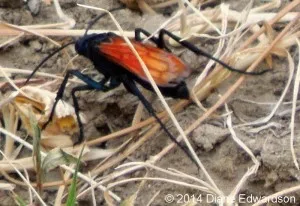
Coloration provides another clear distinction. Murder Hornets have a striking appearance, with a black or dark brown head, a black thorax, and a banded abdomen that is primarily yellow or orange with black stripes. Their legs are also brown. This combination of colors serves as a warning signal, indicating their potential danger to other insects and animals. Tarantula Hawks, on the other hand, exhibit a variety of vibrant colors. They typically have a bluish-black body with reddish-orange wings. The contrast of these colors makes them easily identifiable, even from a distance. The stark differences in coloration not only aid in their identification but also play a role in their communication and behavior within their environments. The Murder Hornet’s more subdued colors reflect its stealthy hunting style, while the Tarantula Hawk’s vivid hues serve as a bold warning to potential predators. See the colors here.
Habitat and Geographical Distribution
Where Murder Hornets Thrive
Murder Hornets are native to East Asia, including Japan, Korea, and parts of China. Their habitat primarily consists of forests and mountainous regions, where they build nests in underground burrows or tree cavities. They have also been found in more human-altered environments, such as orchards and gardens, when food sources are plentiful. In recent years, there has been concern about the introduction and spread of Murder Hornets in North America, particularly in the Pacific Northwest. They are well-adapted to temperate climates and can thrive in regions with similar environmental conditions to their native habitats. The spread of Murder Hornets to new areas poses a significant threat to local ecosystems and native insect populations. Take a look at their habitat here.
Tarantula Hawk Preferred Habitats

Tarantula Hawks are found in the southwestern United States and parts of South America. They prefer arid and semi-arid environments, including deserts and scrublands. Their habitat needs are specific, often associating with areas where tarantulas, their primary prey, are abundant. These wasps are commonly spotted near desert shrubs, along the edges of canyons, and in areas with sandy soil suitable for nesting. The geographical distribution of the Tarantula Hawk is determined by the presence of their prey, tarantulas, and suitable nesting sites. Their habitat selection is crucial for their survival, as it directly impacts their access to food and their ability to reproduce. Observe the habitat here.
Venom and Stings
The Potency of Murder Hornet Venom
Both Murder Hornets and Tarantula Hawks are equipped with powerful venom, but their effects and delivery methods differ. Murder Hornet venom is potent and contains a cocktail of toxins designed to incapacitate their prey and deter potential threats. Their venom is delivered through a large stinger, and the sting can be extremely painful for humans. The Murder Hornet’s venom can cause localized pain, swelling, and allergic reactions in sensitive individuals. The venom also contains pheromones that can signal other hornets to attack, increasing the risk of multiple stings if their nest is disturbed. Always keep a safe distance if one is seen. The venom’s potency is a key factor in their ability to hunt and defend themselves. See the sting.
Tarantula Hawk Sting and Pain

The Tarantula Hawk is renowned for having one of the most painful stings in the world. The sting is described as intensely painful, causing immediate, searing pain that can last for several minutes. Unlike the Murder Hornet, the Tarantula Hawk’s venom is not particularly toxic; the primary effect is the excruciating pain. The purpose of this painful sting is not to kill their prey immediately but to paralyze the tarantula, allowing the wasp to drag it back to its nest to lay an egg on it. The sting’s intensity and the ensuing pain are a unique characteristic of the Tarantula Hawk. See the sting image.
Behavior and Predatory Habits
Murder Hornet Hunting Strategies
Murder Hornets are aggressive predators that primarily hunt other insects, including honeybees, other wasps, and even mantises. They often attack bee colonies, systematically killing the adult bees and consuming the larvae. Their hunting strategy involves coordinated attacks, with multiple hornets working together to overwhelm their prey. The Murder Hornet’s large mandibles and powerful sting are critical tools in their hunting process. They can also fly long distances to search for food, making them highly effective hunters. Murder Hornets are a threat to beekeepers and can significantly impact bee populations. See the strategy here.
Tarantula Hawk Prey and Behavior

Tarantula Hawks have a very specific diet, primarily preying on tarantulas. They are solitary hunters, using their powerful sting to paralyze the tarantula. Once paralyzed, the wasp drags the tarantula back to its nest, where it lays a single egg on the spider’s abdomen. The wasp larva then hatches and feeds on the paralyzed tarantula, eventually killing it. This behavior is a remarkable example of parasitism. The Tarantula Hawk’s predatory behavior is closely linked to the tarantula population, which is critical for their survival. See how they hunt here.
Ecological Roles and Impact
Impact of Murder Hornets on Ecosystems
Murder Hornets can have a significant impact on ecosystems, especially where they are not native. Their aggressive hunting behavior can decimate bee populations, affecting pollination and honey production. They also compete with native predators for resources and can disrupt the balance of insect communities. The introduction of Murder Hornets into new areas raises serious ecological concerns, as they can drive native species to decline. Efforts to control and eradicate Murder Hornets are crucial to mitigate their negative impacts. The control strategy are very complex. See it here.
The Role of Tarantula Hawks in Ecosystems

Tarantula Hawks play an important role in their ecosystems by helping to control tarantula populations. They also serve as a food source for other predators, such as birds and mammals. Their parasitic relationship with tarantulas helps maintain balance and prevent overpopulation. The Tarantula Hawk’s presence is also an indicator of a healthy ecosystem with a sufficient tarantula population. The ecological role of Tarantula Hawks is often underestimated, but they are critical for the balance of their specific habitats. They are not a threat if left alone.
In conclusion, both the Murder Hornet and the Tarantula Hawk are formidable creatures, yet they differ significantly in appearance, habitat, behavior, and ecological roles. The Murder Hornet, with its aggressive hunting of bees and other insects, poses a threat to both humans and ecosystems. The Tarantula Hawk, famous for its excruciating sting, helps to control tarantula populations. Understanding these differences not only helps us to identify and appreciate these insects but also to understand their complex impact on the natural world. As we learn more about these fascinating creatures, we gain a greater appreciation for the intricate web of life that connects us all.