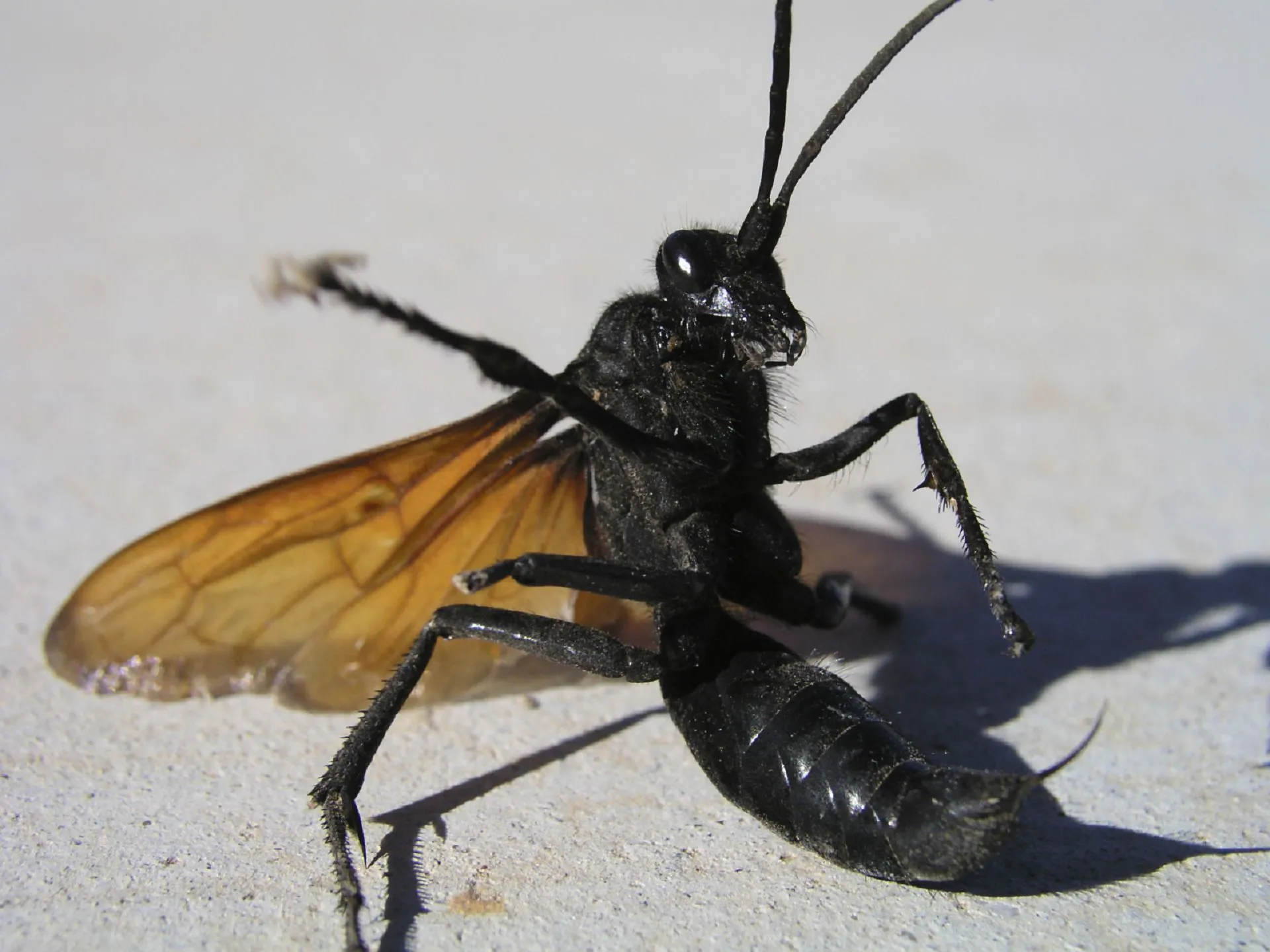
What is a Tarantula Hawk?
The tarantula hawk is a large, striking wasp known for its intimidating size and its unique hunting behavior. These wasps are members of the Pompilidae family and are renowned for their practice of preying on tarantulas. These remarkable insects are not just predators; they are a fascinating example of specialized adaptation and complex ecological roles. Their presence in Georgia adds to the biodiversity of the state’s ecosystem, making them a subject of both curiosity and respect among nature enthusiasts. Understanding the tarantula hawk is more than learning about a single species; it’s an insight into the intricate balance of nature.
Appearance and Identification
Identifying a tarantula hawk is relatively straightforward due to their distinctive appearance. The wasps are typically quite large, often measuring up to two inches in length. Their bodies exhibit a vibrant coloration, commonly featuring a dark, metallic blue or black body contrasted by bright orange wings. This striking combination makes them easily recognizable in their natural habitat. The long legs and prominent antennae further contribute to their unique look, making them stand out among other wasp species. Their appearance serves as a warning to potential predators, indicating the potent sting they possess.
Size and Coloration

Tarantula hawks are among the largest wasps, with females generally larger than males. The body color is typically a deep blue or black, while the wings are a fiery orange or rust color, adding to their visual impact. This bright coloration may also serve as a warning signal to potential predators.
Distinguishing Features
Key features include their long legs, which are used for searching for tarantulas. Their antennae are also quite prominent. The stinger, only found in females, is a significant part of their anatomy, used both for defense and to paralyze their prey. Their overall size and striking coloration help in distinguishing them from other wasp species.
Where to Find Tarantula Hawks in Georgia
Tarantula hawks in Georgia inhabit diverse environments. They are commonly found in areas where their primary prey, tarantulas, also reside. This often includes open, sunny areas with sandy or loamy soils, ideal for tarantulas to build their burrows. Careful observation of their surroundings, such as in meadows, along forest edges, and in scrublands, can increase the chances of spotting these impressive wasps. The presence of flowering plants is another key factor, as adult tarantula hawks feed on nectar.
Ideal Habitats

Tarantula hawks prefer warm, dry habitats. They thrive in areas with sandy soil and access to direct sunlight. These conditions are essential for both their own activities and for supporting the tarantulas they prey on. Habitats that provide both shelter and opportunities for hunting are crucial.
Geographical Distribution within Georgia
While tarantula hawks can be found throughout much of Georgia, their distribution is more concentrated in specific regions. They are more prevalent in the southern and central parts of the state, where the climate and soil conditions are favorable. However, sightings have been reported across various counties, indicating their adaptability to different environmental settings.
The Tarantula Hawk Life Cycle
The life cycle of a tarantula hawk is a remarkable demonstration of nature’s complexity. It begins with the mating of adult wasps. The female tarantula hawk then hunts and paralyzes a tarantula, dragging it to a burrow. She then lays a single egg on the tarantula’s abdomen. Once the egg hatches, the wasp larva feeds on the paralyzed tarantula. The larva grows and develops, eventually pupating within the tarantula’s burrow. After the pupation period, the adult wasp emerges, completing the cycle. This entire process illustrates the intricate balance within an ecosystem.
Mating and Nesting Habits

Mating occurs during the warmer months. The female wasp then seeks out a tarantula, stinging it to paralyze it. She then drags the tarantula to a burrow, where she lays her egg. The nest is typically a burrow in the ground or an existing cavity.
The Role of Tarantulas
Tarantulas serve as a crucial host for the tarantula hawk larvae. The female wasp’s meticulous selection and paralysis of the tarantula ensure a living food source for her offspring. The tarantula, though a victim, is essential to the tarantula hawk’s reproductive success. This interaction highlights the predator-prey relationship, a fundamental aspect of the ecosystem.
The Tarantula Hawk Sting
The sting of a tarantula hawk is infamous for its intense pain. The stinger is used primarily by the female to paralyze the tarantula, and it is also used for defense. The venom contains a neurotoxin that causes immediate, excruciating pain. The pain typically lasts for several minutes, described by some as among the worst pains imaginable. The potent sting is a crucial tool for hunting and survival.
Is the Sting Dangerous to Humans?

While the sting is extremely painful, it is not usually life-threatening to humans. However, the pain can be so intense that it may lead to temporary paralysis. The primary danger comes from the pain itself, which can cause distress and potential accidents. Allergic reactions are rare but possible, and in such cases, medical attention should be sought. Otherwise, the effects are temporary and gradually subside.
First Aid and Treatment
If stung, the primary focus is on managing the pain. Applying ice packs can help reduce the swelling and numb the affected area. Keeping calm and avoiding sudden movements is advisable to prevent further injury. Over-the-counter pain relievers can help manage the discomfort. Medical attention should be sought if allergic reactions occur or if the pain is unbearable or prolonged.
Tarantula Hawk Diet and Behavior
Tarantula hawks are primarily predators, with tarantulas as their main food source for their larvae. Adult tarantula hawks also feed on nectar from flowers, providing them with energy. Their behavior is characterized by a complex hunting strategy and a solitary lifestyle. The female wasps are active hunters, methodically searching for tarantulas. Their behavior showcases remarkable hunting skills, making them a captivating subject of study. The diet is essential for their survival and reproduction, and the behavior is perfectly suited for their predatory role.
Feeding Habits

Adults feed on nectar from flowers, while the larvae are carnivorous, consuming the paralyzed tarantula. The adults’ diet provides energy for flight and reproduction, while the larvae’s diet provides the nutrients necessary for growth. The dual feeding strategy supports the overall life cycle.
Defensive Mechanisms
The primary defense mechanism is their potent sting. The bright coloration and large size also serve as a warning. They are generally not aggressive unless provoked. Their ability to deliver a painful sting is a significant deterrent to predators.
Conservation Status and Threats
The tarantula hawk is not currently listed as endangered or threatened, but they face various threats. Habitat loss due to urbanization and agricultural expansion can limit their hunting and nesting grounds. Pesticide use can also negatively affect their prey and impact the wasps. Understanding the challenges is crucial to ensure their continued survival within the ecosystem. The conservation status highlights the need for ongoing monitoring and habitat preservation.
Natural Predators

Despite their potent sting, tarantula hawks have predators, including birds and other large insects. These predators often target the larvae or newly emerged adults. The natural predators play a role in regulating the wasp population, contributing to the balance of the ecosystem.
Conservation Efforts
Conservation efforts include preserving natural habitats, promoting responsible pesticide use, and educating the public about their ecological importance. Supporting habitat restoration projects and avoiding unnecessary disturbance to their environments can help protect these wasps. Continued research and monitoring are crucial for assessing the population trends and effectiveness of conservation measures.
Conclusion
Tarantula hawks in Georgia are a remarkable part of the state’s biodiversity. Their unique appearance, specialized hunting behaviors, and role within the ecosystem make them a compelling subject of study. By understanding the life cycle, habitat preferences, and conservation needs of these wasps, we can appreciate their importance and contribute to their preservation. The tarantula hawk’s presence enhances the ecological richness of Georgia, reminding us of the intricate and fascinating web of life that surrounds us. Further research and educational initiatives will continue to deepen our understanding and appreciation of these remarkable creatures.